

Why Create a Workout Corner?
A dedicated workout corner can make exercise feel more convenient and consistent. You do not need a large room, expensive machines, or a complete home gym. A small, organized area can provide enough space for stretching, bodyweight exercises, strength work, and light cardio.
The best workout corner is one that fits your home and your routine. It should be easy to reach, comfortable to use, and simple to keep tidy. Even a space next to a bed, in a home office, or in part of a living room can work well.
Choose the Right Location
Start by looking for an area with enough open floor space to move safely. You should be able to stand, stretch your arms, and lie down without bumping into furniture.
Good locations may include:
– A corner of a bedroom
– Part of a living room
– A section of a home office
– A spare room
– An open area in a basement
– A covered outdoor space, if the surface and weather allow it
Consider the floor, lighting, airflow, and noise level. A hard floor can work for many activities, but a mat will make the area more comfortable. Natural light can make the space feel welcoming, while a fan or open window may help with airflow.
Avoid placing exercise equipment near sharp furniture edges, unstable shelves, glass objects, or walkways where other people may trip over it.
Measure Before You Buy
Use a tape measure to check the available area. Note both the floor space and the height of the ceiling. Some exercises involve lifting your arms overhead, while others may require additional room for resistance bands or a jump rope.
Leave enough space to move around each item. Equipment that is packed too closely together can make workouts awkward and increase the chance of knocking something over.
Start With the Essentials
You can build a useful workout corner with only a few basic items. Choose equipment that supports the types of exercise you enjoy and are likely to use.
Exercise Mat
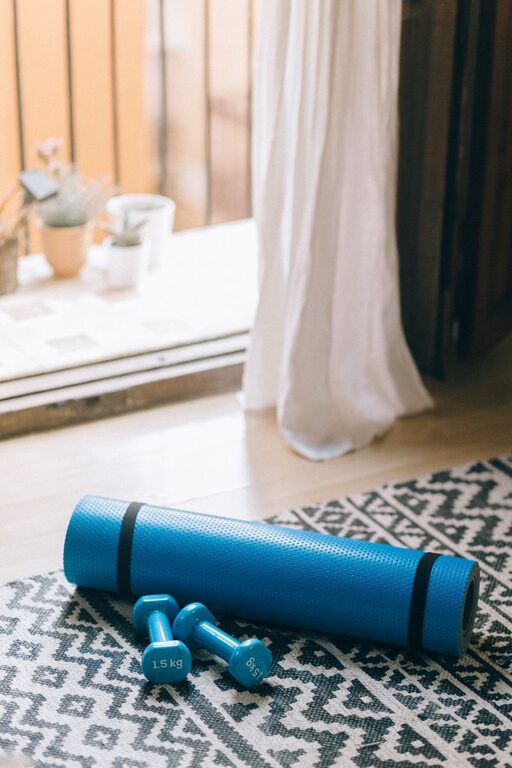
An exercise mat creates a clear boundary for your workout area and provides cushioning for floor exercises. It can make stretching, planks, situps, and mobility work more comfortable.
Look for a mat that:
– Stays in place on your floor
– Is long enough for your body
– Is easy to clean
– Rolls or folds for storage
– Has enough cushioning for your preferred activities
A thicker mat may feel more comfortable for floor-based exercises, while a thinner mat can be easier to store.
Resistance Bands
Resistance bands are lightweight, portable, and useful for many movements. They can support upper-body exercises, lower-body exercises, and gentle mobility work.
Bands come in different resistance levels. A small set lets you adjust the challenge as needed. Store them in a basket, drawer, or wall-mounted organizer so they do not become tangled.
Light Weights
A pair of dumbbells can add variety to basic movements such as squats, rows, presses, and carries. If you are new to strength exercises, start with a manageable weight that allows you to control each movement.
You can also consider adjustable dumbbells if storage space is limited. However, simple fixed weights may be easier to use and store for a beginner-friendly setup.
Small Accessories
A few additional items can improve comfort and organization:
– A towel
– A water bottle
– A small storage basket
– A foam roller
– A timer or simple clock
– A resistance loop
– A stable step platform
You do not need to purchase everything at once. Add items gradually based on how you use the space.
Plan Your Storage
Good storage keeps your workout corner ready to use. When equipment is easy to find, you are less likely to spend time setting up and putting things away.
Use a basket for small items such as bands, towels, and jump ropes. A vertical rack can hold a yoga mat or foam roller. Wall hooks may be useful for bands, provided they are securely installed and placed where they will not create a hazard.
Keep heavier items low and stable. Do not place weights on a narrow shelf or in a high location where they could fall. If children or pets share your home, store equipment in a secure area after each workout.
A small storage routine is usually enough:
- Wipe down equipment when needed.
- Return each item to its usual location.
- Roll or hang the mat neatly.
- Check that walkways remain clear.
- Inspect bands and handles for visible wear.
Make the Space Inviting
A workout corner does not need to look like a commercial gym. It should simply feel pleasant and practical.
You can make the area more inviting by adding:
– A small mirror for checking general form
– A washable floor mat
– A plant placed safely away from movement areas
– A simple lamp
– A speaker for music or guided workouts
– A wall calendar for planning sessions
Keep decorations limited. The primary goal is to create a clear area that encourages movement rather than adding clutter.
A mirror can be helpful, but it should be placed securely and away from areas where equipment may hit it. Any shelves or wall-mounted accessories should also be firmly attached.
Create a Simple Workout Plan
Once your corner is ready, decide how you will use it. A simple plan can combine several types of movement throughout the week.
For example, you might include:
Strength Days
Use bodyweight exercises, resistance bands, or light weights. Common options include squats, wall pushups, rows, lunges, and overhead presses.
Mobility Days
Focus on controlled stretches and gentle movements for the major areas of the body. This can be a short session after waking up or during a break from work.
Cardio Days
Choose activities that fit your space, such as marching in place, step-ups, dancing, or low-impact intervals. Keep the floor clear and choose movements that suit your surroundings.
Rest or Light Activity Days
A rest day can include an easy walk, gentle stretching, or regular household movement. A flexible schedule is easier to maintain than a plan that feels too demanding.
Keep your first sessions short. Ten to twenty minutes can be enough to establish the habit. As the routine becomes familiar, you can gradually adjust the length or variety of your workouts.
Keep Safety in Mind
Before each session, check that the floor is dry and the equipment is in good condition. Make sure bands are not cracked, handles are secure, and weights are placed on a stable surface.
Wear comfortable clothing and footwear that suits the activity. Move with control rather than rushing through repetitions. If an exercise feels uncomfortable or unstable, stop and choose a simpler option.
Keep liquids away from electrical devices, and make sure cords are not crossing the workout area. If you use a screen for guided sessions, place it where you can see it without turning your body awkwardly.
Build a Habit That Lasts
A home workout corner works best when it supports a realistic routine. Place it somewhere visible, keep the equipment organized, and choose a regular time of day. You might exercise before work, during a lunch break, or in the evening.
The goal is not to create a perfect gym. It is to make movement convenient enough that you can return to it regularly. Start with an open space, a mat, and one or two useful pieces of equipment. Over time, you can adjust the corner to match your interests and daily schedule.
A simple, well-planned setup can turn an unused part of your home into a practical place for exercise, stretching, and healthy movement.